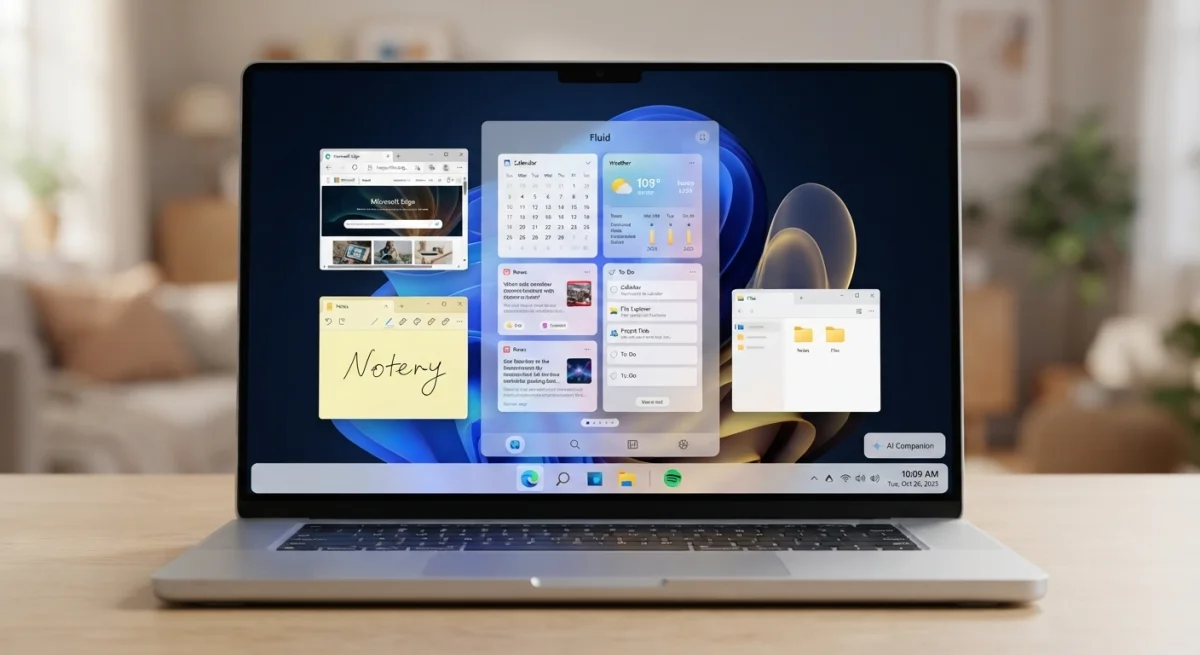
Windows 12: What We Know So Far
Windows 12 is one of the most anticipated upcoming versions of Microsoft's desktop operating system. However, there is an important point to understand: Microsoft has not officially announced Windows 12 or an official release date as of August 2026. Microsoft continues to develop and support Windows 11, including major feature updates and new AI capabilities.
Despite the lack of an official announcement, rumors and reports have provided clues about Microsoft's possible future direction for Windows. These include deeper artificial intelligence integration, improved performance, new system architecture, and greater use of dedicated AI hardware.
Is Windows 12 Official?
At the moment, Windows 12 should be treated as a rumored future product, rather than an officially released version of Windows.
Microsoft's current official documentation identifies Windows 11 as its current Windows client platform, with versions including Windows 11 26H1, 25H2 and 24H2.
Microsoft has also stated through its support community that it has not announced an official Windows 12 release date and warns users to be cautious of websites offering supposed Windows 12 downloads.
When Could Windows 12 Be Released?
There is currently no confirmed release date.
Some technology reports have suggested a possible 2026 timeframe, but other reporting argues that Microsoft is instead continuing to evolve Windows 11 rather than launching a separate Windows 12 release in the near term.
This distinction is important because many features that were previously rumored to be part of Windows 12 are now appearing as Windows 11 updates.
Microsoft Is Continuing to Improve Windows 11
Rather than waiting for a completely new operating system, Microsoft has continued to add major functionality to Windows 11.
For example, Microsoft's official release information shows that Windows 11 26H1 became generally available in February 2026 and continues to receive security and feature updates.
Recent Windows 11 development has also included improvements to the Start menu, Taskbar, File Explorer, Windows Search, accessibility, security and AI functionality.
Possible Windows 12 Features
Although none of the following features should be considered confirmed Windows 12 specifications, they represent some of the major areas discussed in reports about Microsoft's future Windows strategy.
1. Much Deeper AI Integration
Artificial intelligence is expected to play a major role in the future of Windows.
Microsoft has already introduced AI-focused capabilities through Copilot and Copilot+ PCs. Future versions of Windows could take this further by allowing AI services to understand more of the user's activities and provide assistance across applications and system functions.
Possible capabilities could include:
- More advanced Windows Copilot functionality
- AI-assisted system configuration
- Natural-language computer control
- Intelligent file and document searching
- AI-powered application assistance
- Offline or local AI processing
- Improved accessibility features
2. Greater Use of NPUs
Modern AI PCs increasingly include a Neural Processing Unit (NPU) designed specifically for artificial intelligence workloads.
Reports about a possible next-generation Windows platform have suggested that Microsoft could make NPU capabilities increasingly important for advanced Windows features. Some reports have discussed a hardware threshold of approximately 40 TOPS for certain AI functionality, although this should not be regarded as an official Windows 12 requirement.
This could eventually create a larger difference between traditional PCs and newer AI PCs.
3. A More Modular Windows Architecture
One of the recurring rumors surrounding future Windows development is a more modular architecture sometimes associated with Microsoft's CorePC concept.
The idea is to separate different parts of the operating system so that Microsoft can update or maintain components more efficiently while potentially reducing the system footprint.
A modular design could potentially provide:
- Faster Windows updates
- Improved system reliability
- Reduced operating-system footprint
- Better security isolation
- Different Windows configurations for different types of hardware
However, reports about CorePC should be considered part of the Windows development rumor cycle rather than confirmed Windows 12 specifications.
4. Better Performance
Performance optimization is another area that could become increasingly important.
Microsoft has been working on improving Windows 11 responsiveness and reducing some of the performance problems associated with the modern Windows interface. Future Windows development may focus more heavily on reducing background activity and improving resource management.
This could be particularly beneficial for:
- Laptops
- Low-power PCs
- Gaming computers
- AI PCs
- Devices with limited RAM
5. Improved Start Menu and Taskbar
Some features that people associate with a possible Windows 12 redesign are already being tested or introduced in Windows 11.
Microsoft is working on greater customization of the Start menu and Taskbar, including changes intended to address long-standing user feedback. Recent reports indicate that movable and resizable Taskbar functionality is being prepared for Windows 11 rather than necessarily being reserved for Windows 12.
This means that some rumored "Windows 12 features" may eventually arrive as Windows 11 features instead.
Could Windows 12 Require New Hardware?
This is one of the biggest questions surrounding the future of Windows.
Windows 11 already introduced relatively strict hardware requirements, including TPM 2.0 and supported processor requirements.
If Microsoft makes advanced AI capabilities central to a future Windows release, newer hardware could become increasingly important.
Possible requirements could include:
- A modern 64-bit processor
- TPM 2.0
- UEFI and Secure Boot
- A sufficiently powerful GPU for certain workloads
- A dedicated NPU for advanced AI features
- Sufficient RAM and storage
However, there is currently no official Windows 12 hardware requirement list from Microsoft.
What About Older Windows 11 PCs?
It is too early to say whether existing Windows 11 computers will be eligible for a future Windows 12 release.
However, users should not assume that a new operating system will automatically require a new PC. Microsoft could support a broad range of existing Windows 11 hardware while reserving some advanced AI features for newer computers.
This approach would be similar to Microsoft's current Copilot+ PC strategy, where some AI capabilities depend on specific hardware capabilities.
Will Windows 12 Be Free?
There is currently no confirmed Windows 12 pricing information.
Historically, Microsoft has provided major Windows upgrades to eligible users without requiring them to purchase a completely new Windows license. However, Microsoft's future licensing strategy for Windows 12 has not been officially announced.
There have also been reports speculating about subscription-based or premium AI features, but these claims should not be confused with confirmed Windows 12 pricing.
Will Windows 12 Replace Windows 11?
If Microsoft eventually launches Windows 12 as a separate operating system, it would likely become the successor to Windows 11.
However, Windows 11 remains Microsoft's current supported Windows platform. Microsoft is actively maintaining it, and its official release documentation lists multiple supported Windows 11 versions.
For example, Windows 11 version 24H2 Home and Pro editions are scheduled to reach the end of updates on October 13, 2026, while newer Windows 11 versions have longer support periods.
Windows 12 vs Windows 11
| Feature | Windows 11 | Possible Windows 12 Direction |
|---|---|---|
| Operating system status | Official and supported | Not officially announced |
| AI | Copilot and AI PC features | Potentially much deeper system integration |
| NPU | Important for selected AI features | Potentially more important for advanced features |
| Architecture | Modern Windows architecture with legacy components | Possible increased modularity |
| Start menu | Continuously being redesigned | Potentially more customizable |
| Taskbar | Receiving additional customization | Potentially more flexible |
| Hardware requirements | Official requirements exist | Unknown |
Should You Wait for Windows 12?
For most users, there is currently little reason to delay a computer upgrade solely because of Windows 12 rumors.
If your existing computer is compatible with Windows 11, keeping Windows fully updated is the safest approach. Microsoft continues to release security fixes and feature improvements for Windows 11.
If you are purchasing a new computer, however, choosing modern hardware with a capable processor, sufficient RAM, fast NVMe storage and an NPU can provide greater flexibility for future AI features.
Beware of Fake Windows 12 Downloads
Because Windows 12 has generated significant interest, unofficial websites may use the name to distribute modified installers, potentially unwanted software or malware.
Never download a supposed Windows 12 ISO from an unknown website. Microsoft specifically advises users to be cautious about websites claiming to provide Windows 12 downloads.
Conclusion
Windows 12 remains a topic of considerable speculation, but it is important to separate confirmed Microsoft information from rumors and predictions.
As of August 2026, Microsoft has not officially announced Windows 12 or provided an official release date. Windows 11 remains the current supported Windows platform, and Microsoft continues to add significant improvements, including AI functionality, performance enhancements, security updates and interface changes.
If Windows 12 eventually arrives, the strongest indications suggest that artificial intelligence, NPUs, improved performance, greater modularity and a more flexible user experience could play important roles. Until Microsoft provides official information, however, these should be regarded as possible directions rather than confirmed Windows 12 features.
Last reviewed: August 18, 2026
Related Articles
 Windows
How to Fix Windows 11 Slow Performance
Is your Windows 11 PC lagging, freezing or taking forever to boot? Follow this step-by-step guide to speed it up…
 Windows
How to Fix Blue Screen of Death (BSOD) Errors on Windows
Stop errors like IRQL_NOT_LESS_OR_EQUAL, CRITICAL_PROCESS_DIED and MEMORY_MANAGEMENT. Learn what BSODs mean and how to…
 Windows
How to Reset a Forgotten Windows Password Without Losing Files
Locked out of your Windows 10 or 11 PC? Here are safe, legal ways to regain access without losing your files.
Comments (0)
No comments yet. Be the first to share your experience!
Leave a comment